Most of us learned one money rule early: save, save, save. Don’t waste. Be the ant, not the grasshopper. And that advice isn’t wrong. But what if you follow it so well that you end up with a huge bank balance and a life full of “someday” plans that never happened?
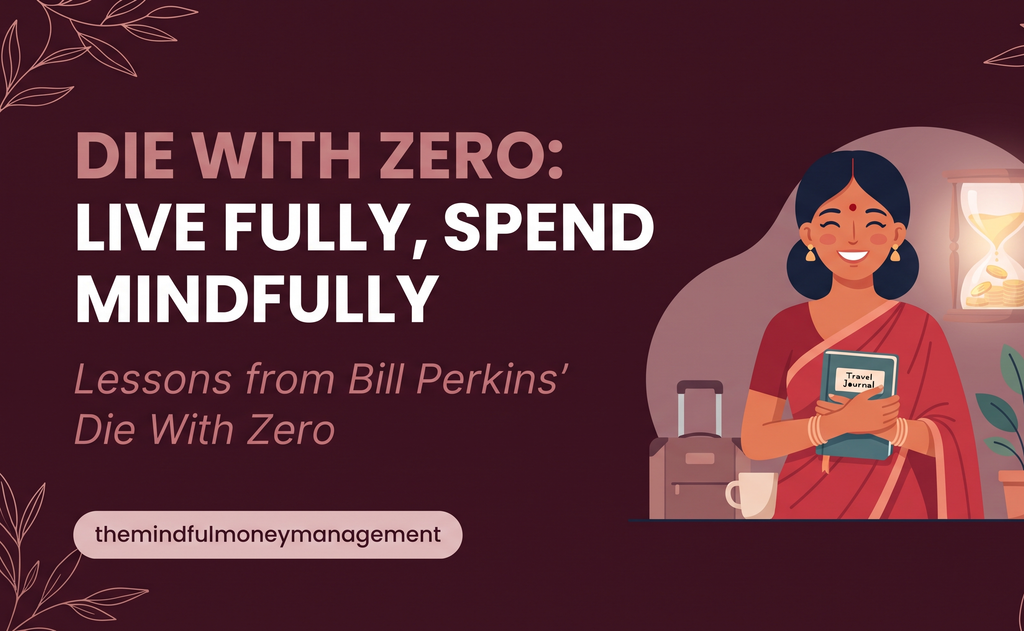
That’s the question at the heart of Die With Zero by Bill Perkins. If you’re looking for practical Die With Zero lessons, this book is one of the most uncomfortable and useful money reads out there. It fits perfectly with what we talk about here at The Mindful Money Management: using money with intention, not just hoarding it or burning it.
Let’s dig into the core ideas, the lessons that matter, and how to apply them to your real life.
💭 What “Die With Zero” Actually Means
First, a myth to clear up. The book does not tell you to spend everything and end up broke. Perkins isn’t telling you to quit your job and max out your credit card.
His point is simpler and more challenging: money is a tool for creating life experiences, and if you die with a huge pile of unspent money, that’s wasted life energy.
Think about it. You spend decades trading your time, health, and energy for money. If that money is still sitting there when you die, you traded part of your life for numbers you never used. The goal isn’t literally zero. It’s to aim to use your money on purpose, so you don’t leave behind a giant unspent balance you’ll never enjoy.
⚡ Key Die With Zero Lessons to Balance Saving and Life
1. You’re Not Just Earning Money, You’re Spending Life Energy
Every rupee, dollar, or pound you earn cost you hours of your life. Perkins calls this your “life energy.”
Most of us track net worth like a scoreboard. But net worth isn’t the real goal. It’s a means to an end. The real goal is a life full of experiences, connection, and meaning.
Try this: Next time you feel guilty about spending on something that matters, or proud of skipping it, ask, “Am I saving this for a real future need, or just out of habit?” Saving with a purpose is smart. Saving on autopilot forever is fear wearing a smart costume.
2. Experiences Pay “Memory Dividends”
This is one of the best ideas in the book. When you invest in a stock, you get dividends. When you invest in a meaningful experience, you get memory dividends, the joy you feel every time you recall it.
That family trip, that dinner with your closest friends, that class you finally took: you enjoy it once while it happens, then again and again in your memories and stories, sometimes for decades.
A gadget gives you a burst of happiness that fades. A great memory keeps paying you back.
Try this: Look back at your last five years. Which purchases do you still smile about? Chances are, most are experiences with people you love. Let that guide where you put your fun money.
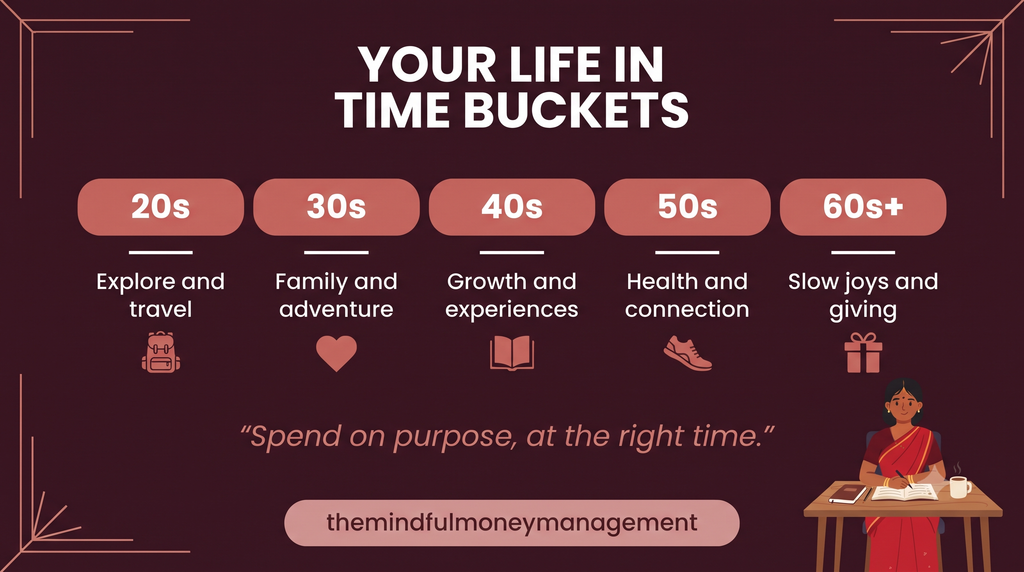
3. Use “Time Buckets” for Your Life
Some experiences only work at certain ages. Trekking a mountain at 25 is very different from trekking it at 75. Playing on the floor with your kids works when they’re little, not when they’re teenagers who’d rather be with friends.
Perkins suggests dividing your life into time buckets (for example, your 20s, 30s, 40s and so on) and asking: “What do I want to experience in this stage that I might not be able to later?”
Then plan for it now, instead of postponing everything to “when I retire.”
Try this: Write a short list titled “Things that are best done in this stage of my life.” Pick just one and put a date on it.
4. Your Health, Money, and Time Peak at Different Ages
This lesson hits hard. Most people build wealth slowly, so they have the most money late in life, right when their health and energy are lower. Meanwhile, when they’re young and healthy, they have the energy and time but little money.
Perkins argues that your ability to enjoy your money declines as you age. That’s why waiting until 65 to start enjoying life is risky. You may still have the money, but not the same health, stamina, or opportunity.
His advice: find the sweet spot where you still have good health, enough money, and free time, and use it. For many people, that’s earlier than they think.
This doesn’t mean spending recklessly at 30. It means not treating your 30s, 40s, and 50s as just a “waiting room” for retirement.
5. Give While You’re Alive, Not Only After You’re Gone
Many people save with the hope of leaving a big inheritance. Perkins questions the timing. By the time most people inherit money, they’re already in their 50s or 60s, past the years when help would have mattered most.
He suggests giving to your children or causes you care about while you’re alive, when the money can make a real difference and you can enjoy seeing its impact. Helping with education, a first home, or a business idea when your kids need it beats a big lump sum decades later.
Try this: If you hope to leave something for family, think about which needs are biggest right now and whether you can help with a portion today, while still keeping your own future secure.
🛡️ Don’t Be Reckless, Plan Smartly
Now the important reality check, because this book can be misread. Die With Zero is not permission to ignore your future. You still need:
- An emergency fund
- Insurance (health, life, and others as relevant)
- Retirement savings that will realistically last (like investing steadily through index funds)
- A plan for unexpected expenses
Perkins himself talks about managing the risk of living longer than expected, using tools like annuities and careful planning. The point isn’t to gamble with your security. It’s to make sure your “safety” doesn’t grow so large that it crowds out your life.
Think of it as two questions to hold together:
- Am I secure enough?
- Am I actually living, or just preparing to live?
Most of us only ask the first one.
🌿 How This Fits Mindful Money Management
At its core, mindful money is about intention. Not restriction. Not indulgence. Intention.
Die With Zero pairs beautifully with the mindful money approach:
- Financial minimalism says: cut the spending that doesn’t matter (you can read more about streamlining your habits in our guide on the 50/30/20 budgeting rule.
- Die With Zero says: then fully spend on what does matter.
They’re two sides of the same coin. You trim the noise so you have room, and money, for what truly enriches your life.
✅ Your Die With Zero Action Checklist
Here’s a simple way to put this into practice this week:
- ☐ Write down 3 experiences you’ve been postponing “for later”
- ☐ Circle the one that gets harder with age or life stage
- ☐ Decide a realistic amount and a date, even a small one
- ☐ Check that your basics (emergency fund, insurance, retirement contributions) are on track
- ☐ Pick one memory-rich experience to invest in this month
- ☐ If you plan to help family, decide what you can share now without hurting your own security
Start small. A weekend trip. A class. A long-overdue reunion. Small, meaningful steps count.
💬 Final Thoughts
The biggest lesson from Die With Zero isn’t “spend more.” It’s “spend on purpose.” Your money is meant to serve your life, not the other way around.
Saving is powerful. Security is important. But a life spent only preparing for a future that never fully arrives is a quiet kind of loss. The healthiest approach is balance: build a solid foundation, then let your money help you create memories, connections, and experiences that make your one life feel full.
(Disclaimer: This post shares lessons from a book for educational purposes and is not personal financial advice. Please consider your own circumstances and consult a qualified financial professional for decisions about your money.)
🗨️ Let’s Talk
If money were no worry this year, what is one experience you’d finally say yes to? Tell me in the comments, and let’s inspire each other to live fully and spend mindfully. 💛
Loved this? Follow along for more lessons from the 100-day book challenge and check out our thoughts on books like The Psychology of Money as we build a wealthier, more intentional life together!