
Newyear prep series 2027

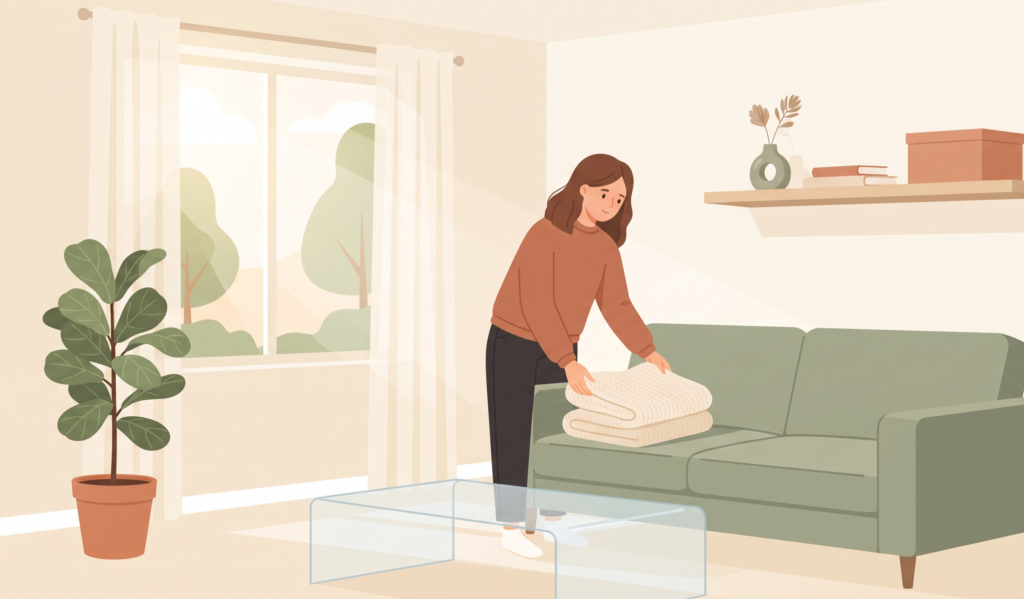
Bright tidy living room after a family begins to declutter your home before the new year
Newyear prep series 2027

Declutter Your Home: 7 Powerful Steps for a Fresh Start

When you declutter your home, you don’t just clear space. You clear mental noise. A cluttered home quietly asks for attention all day: the pile on the table, the overflowing shelf, the cupboard you’re afraid to open. Letting go of that load can feel like taking a deep breath. 🌿 Welcome to Day 6 of the New Year Prep series. You’ve chosen your priorities and built your stop doing list. Now it’s time to make your physical space support them. In this guide, you’ll learn a simple 7-step, room-by-room plan to declutter your home without spending a whole weekend or feeling overwhelmed. New here? Start with Day 5: Stop Doing List and Day 4: Choose Your Priorities. 🌟 Why You Should Declutter Your Home Before the New Year Clutter is postponed decisions. Every item you can’t decide about stays on the shelf, in the drawer or on the table, and every time you see it, you quietly decide “later” again. That’s tiring. Decluttering also saves money and time. You stop buying duplicates because you can’t find things, and you spend less time searching and tidying. Many people also find that a calmer home makes it easier to start new routines in January. Popular methods like the one made famous by Marie Kondo encourage you to keep items that truly add value to your life. You don’t need to follow any method perfectly. Just use what helps. ⏱️ Step 1: Start Small With a Timer Don’t plan a full-house marathon. Set a timer for 30 minutes and work on one small area. Short sessions are easier to start and harder to quit halfway. Plan five to seven short sessions over a week or two. Take a quick “before” photo of each area. Seeing the change later is very motivating. 📦 Step 2: Prepare Your Four Boxes Get four boxes or bags and label them: The fourth box saves you from wandering around mid-session. Empty it only after you finish. ✨ Step 3: Begin With the Easiest Spots Build momentum with places that have clear answers: You’ll make dozens of quick decisions in a short time, and that feels great. 🍳 Step 4: Tackle the Kitchen The kitchen is full of hidden clutter. Take everything out of one cupboard or drawer at a time and check: Keep your most-used items within easy reach and move rarely used ones to higher shelves. Group similar things together, like all baking tools in one place, so you can find them quickly. 🛋️ Step 5: Clear Living Areas and Paper Clutter In living rooms, look for items that have no real home: stacked magazines, extra cushions, decor you’ve stopped noticing and festival decorations scattered in the wrong places. Paper clutter needs its own system: Don’t worry about perfect filing today. A proper documents cleanup is coming later in this series. 🛏️ Step 6: Simplify Bedrooms and Storage In bedrooms, start with surfaces, under-bed storage and the top of the wardrobe. Clear anything that doesn’t belong in a restful space, like old files, boxes of papers and unused items waiting to be “sorted someday.” For storage areas, take everything out, wipe the shelves, and put back only what you truly use. Label boxes clearly. We’ll do a full wardrobe reset later in the series, so just handle the obvious extras today. 🔁 Step 7: Keep It That Way A decluttered home only stays that way with simple habits: Drop off your donation box within a week, or the items will creep back into the house. Local charities, neighbors or relatives may happily take them. ✅ Declutter Your Home Checklist ❓ Declutter Your Home: Frequently Asked Questions Where should I start to declutter your home?Start with the easiest spots, like counters, bathroom shelves and expired items. Small wins build momentum for harder areas. How long does it take?Short 30-minute sessions over one to two weeks work better than one exhausting weekend. What if I can’t decide whether to keep something?Ask whether you’ve used it in the past year and whether you’d buy it today. If both answers are no, let it go. For truly tricky items, place them in a “maybe” box and check it in three months. What about sentimental items?Keep what truly matters, and consider photographing the rest. You can honor a memory without keeping every object. 🌿 Final Thoughts When you declutter your home, you make room for calm, focus and the new routines you want in 2027. Every item you let go is one less thing asking for your attention. Next, on Day 7, we’ll do the same for your digital life over on our sister blog, Mindful AI Hacks. And if you’d like all the New Year Prep worksheets in one place, grab the Ultimate New Year Prep Guide from The Mindful Studio Shop. Now it’s your turn: which spot in your home are you decluttering first? Share it in the comments. I’d love to cheer for you! 👇


Woman writing a stop doing list in a notebook at a sunny desk
Newyear prep series 2027

Stop Doing List: 7 Powerful Steps to Free Your Time

A stop doing list is the opposite of a to-do list, and it may be the most freeing page you write all year. We spend so much effort adding tasks, habits and goals that we forget the fastest way to find time is to remove something. 🌿 Welcome to Day 5 of the New Year Prep series. On Day 3 you decided what to leave behind from the bigger picture of your life. Today is more practical: you’ll build a stop doing list of daily behaviors, tasks and habits that quietly eat your time and energy. In this guide, you’ll learn 7 simple steps to create one you’ll actually follow. If you’re joining midway, start with Day 4: Choose Your Priorities and Day 3: What to Leave Behind in the New Year. Your stop doing list protects the three priorities you chose. 🌟 Why You Need a Stop Doing List Every yes has a hidden cost. Economists call this opportunity cost: the value of the best thing you gave up to do something else. When your day is full of low-value tasks, the cost is the time you never had for your real priorities. A to-do list only adds. A stop doing list subtracts. It frees up hours without asking you to become more productive or more disciplined. You simply stop spending effort on things that don’t deserve it. 👀 Step 1: Notice What Your Day Really Looks Like For three days, jot down what you do in rough blocks: morning, afternoon, evening. You don’t need exact minutes. Just note what actually happens, including the quick phone checks, the “I’ll just tidy this” detours and the tasks you do only out of habit. You’ll probably spot patterns you’ve never noticed. That’s the raw material for your list. 🔍 Step 2: Know the Five Types of Drainers Most things on a stop doing list fall into one of these groups: Read your three-day notes and label each drainer with one of these types. ⚖️ Step 3: Ask the Opportunity Cost Question For every drainer, ask: “What could I do with this time instead?” Be specific. Thirty minutes of evening scrolling could be a walk, a chapter of a book or progress on one of your three priorities. Then ask the fresh start question: “If I weren’t already doing this, would I start today?” If the answer is no, it belongs on your list. ✍️ Step 4: Write Your Stop Doing List Now put it on paper. Keep each item specific and behavior-based, and add what you’ll do instead. Limit your list to seven to ten items. Here’s a sample: Stop Instead Checking my phone first thing in the morning Drink water and stretch for 10 minutes Saying yes immediately to requests “Let me check and get back to you” Scrolling in bed Read two pages of a book Redoing tasks that are already good enough Finish, then move on Buying things on impulse Add to a 48-hour wish list A list of “I will stop being lazy” isn’t useful. A list of clear actions is. 💬 Step 5: Handle the Hard Ones Some items are easy. Others involve other people or deep habits. Here’s how to handle the tough ones: You don’t owe anyone a long explanation. A short, polite answer is enough. 📌 Step 6: Make Your List Visible A list hidden in a notebook gets forgotten. Put your stop doing list where you’ll see it: a sticky note on the mirror, your phone lock screen or the fridge door. Pair each item with a trigger. For example, “When I get into bed, my phone goes on the charger across the room.” Visibility and triggers do far more than good intentions. 🔄 Step 7: Review It Every Week Take 10 minutes each Sunday to check your list. Ask: Which items did I stop? Which ones keep slipping? What new drainer showed up? Cross off the ones that have become automatic, and add one new item at a time. Celebrate your streaks, even small ones. Three days of not scrolling in bed is a real win. ✅ Stop Doing List Checklist ❓ Stop Doing List: Frequently Asked Questions What is a stop doing list?It’s a written list of habits, tasks and commitments you’ve decided to stop, so you free time and energy for what matters. How is it different from leaving things behind?Leaving things behind (Day 3) is a bigger life review. A stop doing list focuses on everyday actions you can change this week. How many items should I include?Seven to ten is plenty. If your list is too long, you won’t follow it. What if I keep slipping back into old habits?That’s normal. Check your trigger, make the habit harder to do, and restart tomorrow. One slip doesn’t erase your progress. 🌿 Final Thoughts Your stop doing list isn’t about being strict. It’s about making space. When you stop spending effort on things that don’t matter, you finally have time for the ones that do. Tomorrow, on Day 6, we’ll declutter your home, so your space supports your priorities too. And if you’d like all the New Year Prep worksheets in one place, grab the Ultimate New Year Prep Guide from The Mindful Studio Shop. Now it’s your turn: what is the first thing on your stop doing list? Share it in the comments. I’d love to cheer for you! 👇

choose your priorities
Newyear prep series 2027

Choose Your Priorities: 7 Powerful Steps to Focus in 2027

Knowing how to choose your priorities is the difference between a busy year and a meaningful one. Every December we write a long list of things we want to do, and by February most of that list is forgotten. The problem isn’t a lack of discipline. It’s that we tried to say yes to everything at once. 🌿 Welcome to Day 4 of the New Year Prep series. You’ve reviewed your wins and lessons, and you’ve decided what to leave behind. Now you have space, so today you’ll choose your priorities for 2027: just three of them. In this guide, you’ll learn a simple 7-step process to choose your priorities clearly and without overwhelm. New here? Catch up with Day 2: Wins and Lessons of the Year and Day 3: What to Leave Behind in the New Year, because today builds directly on both. 🌟 Why You Should Choose Your Priorities (and Only Three) Your time, energy and money are limited. When you spread them across ten goals, each one gets a thin slice and none of them moves much. When you choose your priorities carefully, each one gets real attention. The Pareto principle, often called the 80/20 rule, suggests that a small share of your efforts creates most of your results. You can read more in this overview of the Pareto principle. It’s a rule of thumb, not a law, but it’s a helpful reminder that a few right things beat many random things. Why three? Because three is easy to remember, easy to review and small enough to protect. You can still have other goals. They just don’t get top billing. 📚 Step 1: Gather Your Notes Open everything you’ve written so far in this series: your reset answers, your wins and lessons, and your list of what you’re leaving behind. Highlight anything that appears more than once. Repeated themes are signals. If “I need more rest” shows up in three places, it deserves a serious look. 🧠 Step 2: Brain-Dump Everything You Want Set a timer for 10 minutes and write every goal, wish and idea you have for 2027. Don’t edit yourself. Use five areas to help you remember everything: Aim for at least 15 items. This is the messy part, and it’s supposed to be. 🔎 Step 3: Run the Four-Question Filter Now test each item with four questions: Give each item one point per “yes.” Items with three or four points are your finalists. The rest aren’t bad ideas. They simply aren’t priorities this year. ✂️ Step 4: Narrow Down to Three Look at your finalists and ask: “If I could only achieve three things in 2027 and feel proud, what would they be?” Try to pick from different areas so your life stays balanced, or choose three that support one bigger theme. Write your three priorities at the top of a clean page. Then move everything else to a Later List. It isn’t deleted. It’s simply waiting its turn. That makes it much easier to let go of the guilt. 🎯 Step 5: Make Each Priority Specific A vague priority is a wish. A specific one is a plan. For each of your three, write the outcome, why it matters and one small action for this week. Here is how to turn vague into clear: Vague priority Specific priority Get healthier Walk 30 minutes, five days a week Save more money Build a three-month emergency fund by December Grow my side business Launch one digital product by June Specific priorities are also easier to measure, which means you’ll know when you’ve actually won. 🛡️ Step 6: Protect Your Priorities Choosing is the easy part. Protecting your priorities is where most people struggle. Try these simple habits: 📅 Step 7: Set a Monthly Check-In Choose one day each month, such as the first Sunday, for a 15-minute review. Ask: What moved forward? What got in the way? What do I adjust? Priorities aren’t set in stone. If life changes, you can change one, but do it on purpose, not by drifting. ✅ Choose Your Priorities Checklist ❓ Choose Your Priorities: Frequently Asked Questions Why only three priorities?Three is large enough to cover what matters and small enough to remember and protect. If you have more, spread them over seasons, not all at once. What if all my goals feel equally important?Ask which one, if done, would make the others easier. That one usually goes first. Can I change my priorities mid-year?Yes. Use your monthly check-in to decide on purpose. Change is fine. Drifting is the problem. What if I don’t achieve my priorities?Look at what got in the way instead of blaming yourself. Often the goal was too vague, or the time was never protected. 🌿 Final Thoughts When you choose your priorities with care, you stop living in reaction mode and start living on purpose. You can’t do everything, but you can do the right few things well. Tomorrow, on Day 5, we’ll build your stop doing list, so nothing steals time from your three priorities. And if you’d like all the New Year Prep worksheets in one place, grab the Ultimate New Year Prep Guide from The Mindful Studio Shop. Now it’s your turn: what is priority number one for 2027? Share it in the comments. I’d love to cheer for you! 👇

Scroll to Top